One Day, One Window, One Difference: What a Same-Day Shopfront Refresh Really Costs
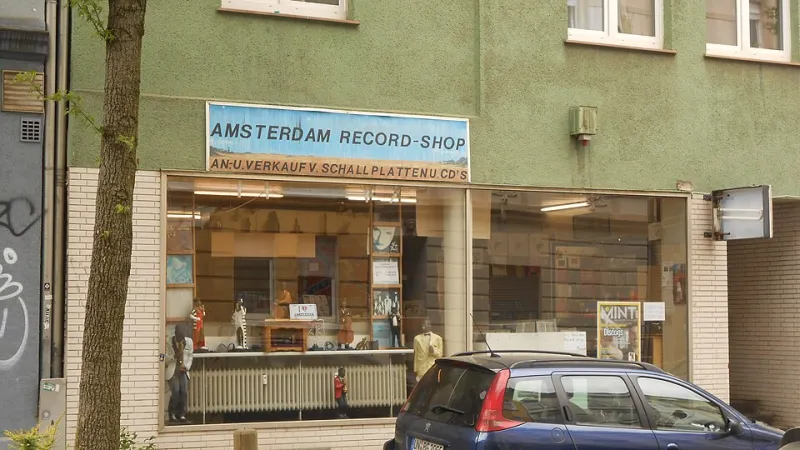
Photo: Joehawkins, CC BY-SA 4.0, via Wikimedia Commons
There's a moment every small retailer knows. You're walking back to your own shop after a day off, and you see it the way a stranger does: the faded sale sticker from Easter, the sun-bleached vinyl peeling at one corner, the window so cluttered you can't tell what you sell. The instinct is to panic about a full rebrand. The reality is you probably need one good day.
We've done enough of these single-day refreshes now to give you honest numbers — not brochure numbers, but what actually leaves your account and what actually changes on the pavement outside.
The £300 Refresh: Tidy, Not Transformed
Three hundred pounds is the 'stop embarrassing yourself' budget. It buys cut vinyl and simple printed elements: a clean opening-hours panel, your logo in frosted etch-effect vinyl across the glass at eye height, and removal of everything that's currently making the window look like a car boot sale.
The materials themselves are modest — maybe £80–£120 of vinyl for a typical three-metre frontage. The rest is the fitter's time, and that's the bit people undervalue. A good fitter doesn't just stick things on glass; they strip the old stuff, clean the residue, and line everything up so it looks intentional rather than improvised.
Timeline: one fitter, roughly four to five hours, done by mid-afternoon. You can usually trade as normal while it happens, though expect a bit of tape and a squeegee near the door for a couple of hours.
What it delivers is subtle but real: the shop stops apologising for itself. It won't pull someone across the road, but it will stop the slow leak of people who glance, assume you're closed, and keep walking.
The £800 Refresh: The One That Suits Most Shops
This is the sweet spot, and it's where we steer most independent retailers who ring us in a mild panic. At £800 you're getting everything from the £300 job plus a proper printed element — a full-height window graphic on the main pane, something with a photograph or bold colour block that reads from twenty metres away, plus a chalkboard-style printed panel for the latest offer that you can update with a chalk pen rather than reordering.
The printed window film is the game-changer. Cut vinyl says 'open and tidy'; a well-designed printed panel says 'this is who we are'. A bakery we worked with in Stockport had a full-height image of their counter with the shop name reversed out in white — visible from the bus stop, which, it turns out, is where a surprising number of purchase decisions get made.
Timeline: still one day, but now with a designer involved beforehand. Budget a week or two of lead time for design and printing — the fitting itself remains a single morning-to-late-afternoon job with two people.
The £1,500 Refresh: Fascia Accents and the Full Street Presence
At £1,500 you're no longer just doing windows. This tier typically adds a fascia accent — a printed or cut-vinyl panel applied to the fascia board above the shopfront, which is often the most visible part of your premises and the most neglected. If your fascia is the original 1990s plastic in a colour that's drifted from white to something vaguely nicotine, this is the fix.
You'd also get both main windows treated rather than one, better materials (anti-graffiti laminate is worth considering on busy high streets), and often a projecting element like a vinyl-covered A-board to tie it together.
Timeline: one full day with a two-person crew, sometimes spilling into a second morning if the fascia needs prep. Plan the day around it properly — this is the tier where you might want to close for the morning or arrange a staff member to field deliveries.
Do You Need Permission for a Short-Term Display?
The honest answer: usually no, but check two things. First, if you're in a conservation area or your lease mentions signage approval, a window graphic refresh is normally fine — it's generally considered like-for-like maintenance — but a fascia change can need landlord consent. Ring them; it takes ten minutes and avoids an awkward letter later.
Second, if your property has an advertisement consent condition attached (rare, but it happens on listed buildings and some planned developments), temporary window displays are typically exempt under the Town and Country Planning (Control of Advertisements) Regulations, but permanent fascia graphics may not be. Your signage company should flag this — if they don't mention it, ask.
What Actually Changes: The Before-and-After Numbers
We'll be straight with you: we're a print shop, not a research institute. But across the refreshes we've tracked with customers, the pattern is consistent enough to share.
Shops that went from cluttered-or-faded to clean-and-bold typically reported a noticeable bump in walk-ins in the first fortnight — commonly in the 10–20% range, with one gift shop in Lancaster reporting closer to 30% after adding a single bold printed panel where previously there'd been a wall of handwritten signs. The effect tends to settle after a few weeks to a steady uplift of perhaps 5–10% over the old baseline. That's not a life-changing number on its own. On a £800 spend, though, it pays for itself inside a quarter for most shops selling anything with a £10 margin.
The bigger effect is harder to measure: the shop looks like it's doing well, and people are drawn to businesses that look like they're thriving. It's circular, slightly unfair, and entirely exploitable.
Doing It Right in One Day
If you take one thing from this: the difference between a £300 job and an £800 job isn't really the money. It's the design time. The shops that get the most from a single-day refresh are the ones who spend a week thinking about what their window should say — one message, one image, one clear reason to step inside — before anyone fires up the plotter.
The vinyl goes up in hours. The thinking should go in first.