Same Banner, Different Street: Escaping the High Street Clone Wars
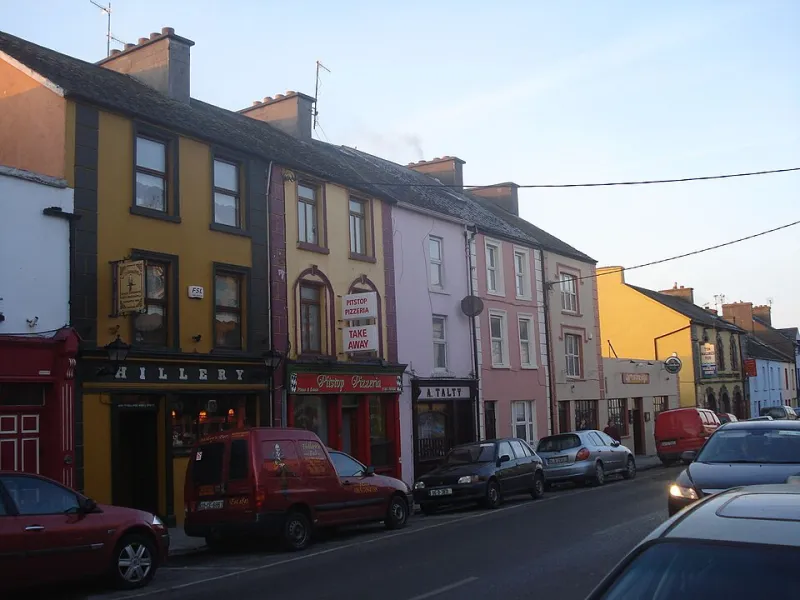
Photo: Eddylandzaat, CC BY-SA 3.0 nl, via Wikimedia Commons
Here's a game for your next stroll up the high street: try to remember one banner you walked past.
Not the shop — the banner. The actual rectangle of printed PVC that someone paid good money for and someone else spent an afternoon cable-tying to a railing. Can you picture it? Chances are you can't, and that's precisely the problem.
The Great Banner Blur
Somewhere along the line, the UK's independent shops all started buying the same thing. Bold headline in a heavy sans-serif. Yellow starburst in the corner. "SALE" in red on white, or white on red, or — if someone was feeling daring — blue on yellow. A phone number along the bottom. Done.
The result is a high street where everything shouts and nothing is heard. When every shop uses the same templates, the banners cancel each other out. It's like being at a party where everyone's shouting at the same volume: eventually you just stop listening to any of it.
And here's the uncomfortable bit: template banners are usually cheap for a reason. The design cost has been squeezed to nothing, which means nothing went into the design. You're not buying attention — you're buying a rectangle that blends in.
Why We All Ended Up Here
It's not that small business owners don't care. It's that banners are a grudge purchase — something you order when you need it now, from whoever can turn it around by Friday. Templates win on speed and price, and the visual sameness is a side effect nobody notices until it's everywhere.
But standing out doesn't require a big budget. It requires slightly different decisions at the point of order. Here's where to make them.
Four Levers That Actually Work
Colour — but not the colour everyone else picked. The default banner palette is red, yellow and blue because those colours are loud. But when every shop is loud, the clever move is contrast. If your neighbours run red and white, a deep teal, a warm mustard or a clean black-and-cream scheme will make you the one that registers. Look up and down your street first; then choose the colour nobody else is using.
Scale — go bigger than feels comfortable. Most banners are too small for the distance they're read from. A pedestrian has about two seconds; a driver has less. If your banner is readable from twenty metres, it's working. If it's only readable from five, it's decoration. Measure the sightline, then size accordingly — a single large word often beats five lines of small text.
Material — let the format do the talking. This is the most underused lever of all. Mesh banners handle windy coastal towns and exposed high streets without becoming sails. Scaffold banners turn building works — usually a shop's ugliest moment — into prime advertising space. Reflective inks catch headlights on evening-high streets, working the night shift for free. Each of these does a job a standard PVC rectangle simply can't, and none of them cost the earth.
Shape and placement — break the rectangle. A banner doesn't have to be a horizontal strip above the door. Vertical banners hung down a narrow gap between buildings. A square panel filling a recessed window. A long, thin banner running along a fascia. Changing the geometry alone is often enough to stop the scroll of a passing eye.
Less Text, More Point
One more thing, and it's the cheapest fix of all: cut the words.
The classic template banner tries to say everything — the offer, the dates, the terms, the phone number, the website. Nobody reads it. A banner is a headline, not a leaflet. "Fresh bread, 7am daily" will outperform a paragraph of small print every single time. Say one thing, say it big, and let the shopfront do the rest.
The Street Is Watching
Every high street is competing with out-of-town retail and next-day online delivery. The shops that thrive are the ones that feel alive — that look like someone local cares.
A thoughtful banner won't save a struggling business on its own. But it's a visible, public declaration that you're here, you're open, and you're not the same as the shop three doors down. On a street full of shouting, be the one worth listening to.