So You've Ordered Signage — Here's What Happens Next
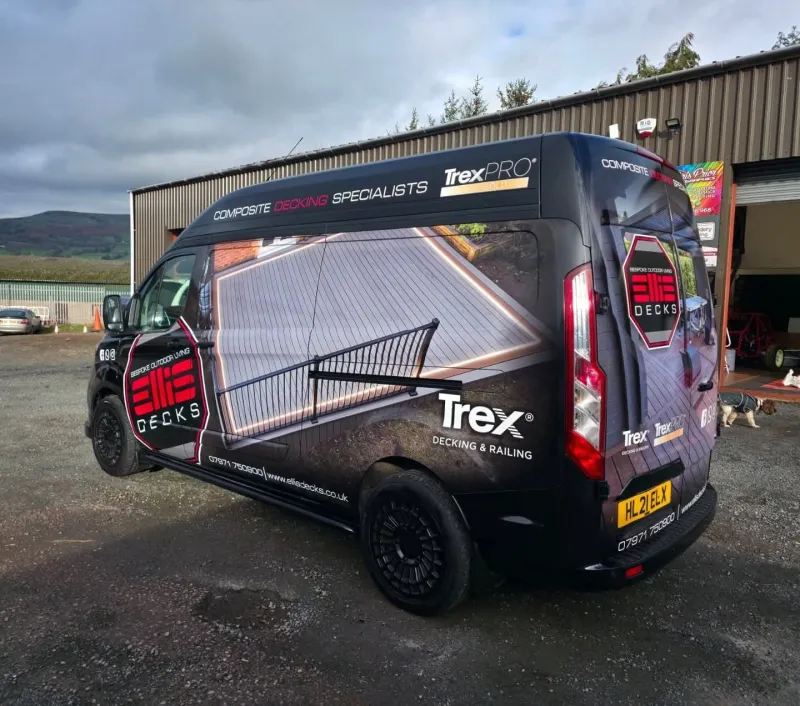
Photo: vehicle wrap installation vinyl van graphics workshop, via chrispriorgraphics.co.uk
If you've never ordered signage before, the process can feel a bit mysterious. You send off a logo, someone mentions "vector files" and "lamination", and three weeks later a beautifully wrapped van rolls back to you. What happened in between? And more importantly — what could go wrong?
Having done this for years, we reckon it's worth demystifying. Business owners who understand the process make better decisions, spot problems earlier, and end up with graphics that last. So here's the honest, warts-and-all walkthrough.
Stage One: The Artwork Conversation
It starts, as most things do, with a chat. What's the vehicle? What's the message? Full wrap, partial wrap, or just cut vinyl lettering on the doors?
Then comes the bit that catches people out: file formats. That logo your nephew designed in Word? It won't wrap a van. We need vector artwork — AI, EPS, or PDF files where the shapes are defined mathematically so they scale to any size without going fuzzy. If all you've got is a JPEG pulled off your website, don't panic. A decent sign shop will redraw it into a usable vector file. It costs a bit extra, but it's a one-off job that pays for itself every time you order print afterwards.
Stage Two: The Proof — Read It Like a Contract
Before anything is printed, you'll get a proof: a mock-up showing exactly how the design will sit on your vehicle or shopfront. Some people glance at it and say "lovely, crack on." Please don't be that person.
Check the phone number. Check the postcode. Check the spelling of your own company name — you'd be amazed. Check that the logo is the right way round and the colours match what you expected. Once vinyl is printed and laminated and cut, changes are expensive or impossible.
This is also the moment to ask practical questions. Will the design work around the door handles and shut lines? Is the text big enough to read at traffic-light distance? A good rule of thumb: if someone behind you at a roundabout can't read your website in five seconds, the type's too small.
Stage Three: Choosing Materials (Or Trusting Us To)
You don't need to become a vinyl expert, but a little knowledge helps. For vehicle wraps, we're generally talking cast vinyl — a thin, flexible film that moulds over curves and rivets, usually with a lifespan of five to seven years outdoors in the British climate. Cheaper calendered films exist, and they're fine for flat, short-term work, but on a van's curves they tend to fail early.
Then there's lamination — a clear protective layer that guards against UV fading, petrol spills, and the odd trip through a car wash. Skip it and you might save £100 today; you'll lose years of life later.
For shopfront work, the material menu is broader: acrylic sign trays, aluminium composite panels, cut aluminium letters, and frosted window film. The right choice depends on whether it's internal or external, how long you need it to last, and what your landlord's lease says about the fascia. Yes, really — check the lease before you order. Landlords and conservation officers have opinions, and some high streets require planning permission for illuminated signage.
Stage Four: Production and Fitting
With artwork approved and materials picked, printing usually takes a few days. Then the fitting.
A full vehicle wrap is genuinely skilled work. The van goes into a clean, temperature-controlled bay, gets a deep clean and often a degrease, panels are removed where needed, and the vinyl is applied section by section with heat guns and squeegees. A transit-sized van typically takes two to three days. Cut vinyl lettering or a partial wrap is quicker — often a single day.
Shopfront signs vary more. A simple fascia panel might go up in a morning; an illuminated sign involves electrics, and the fitters need proper certifications. Either way, ask in advance how long the install takes and whether you'll need to close for it.
What to Ask Before You Commit
A short list that'll serve you well:
- What vinyl brand and lifespan am I getting?
- Is lamination included in the quote?
- Who owns the artwork files once they're redrawn? (You should.)
- What warranty covers fading, peeling, or fitting faults?
- Can I see examples of similar jobs, ideally photos taken a year or two after fitting?
The Payoff
A well-specified wrap or sign isn't a cost — it's advertising that works every single day, parked outside your house or glowing above your door. Get the process right, and it'll still be earning its keep years from now. And if you're ever unsure at any stage, just ask. We'd rather answer ten questions before the proof than one complaint after the install.