Respray or Rebrand on Wheels? The Real Numbers Behind Refreshing Your Work Van
Photo: Avco Records, Public domain, via Wikimedia Commons
There's a moment in every van owner's year when they look at their vehicle in the car park and think: that's seen better days. Sun-bleached lettering, a scratch from that tight loading bay in Leeds, the phone number of a business that changed its branding three years ago.
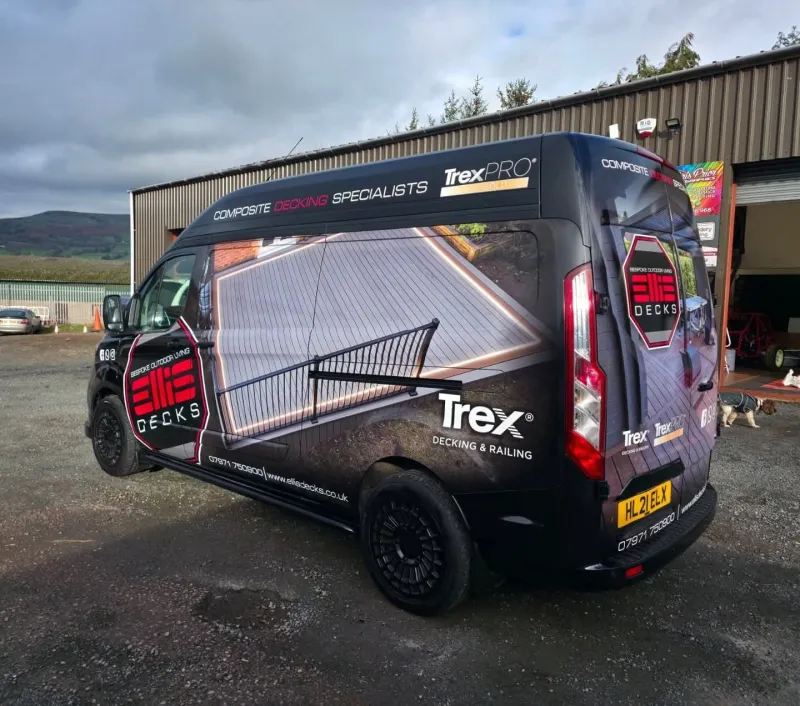
The instinct is often to reach for the spray gun. But for most UK trades and delivery businesses, a vinyl wrap is the smarter call — and not always for the reason you'd expect. Here's the honest breakdown.
The money question first
Let's talk real numbers. A professional respray on a medium-sized van (think Transit Custom or Vivaro class) typically runs £1,500–£3,500 in the UK, depending on whether you're matching existing paint or going for a full colour change. That figure climbs fast if there's rust or filler work underneath.
A full commercial wrap on the same van? Usually £1,200–£2,500 including design work. For a simple colour change in a standard film, you might land at the lower end. Add printed branding, cut vinyl logos and laminated panels, and you're mid-range.
So the sticker prices are closer than most people assume — and paint's reputation as the "cheap option" doesn't really hold up anymore.
Where paint genuinely wins
We'll be straight with you: paint isn't the wrong answer in every scenario.
- You're keeping the vehicle 8+ years. A quality respray can outlast two or three wraps.
- The bodywork is rough. Wraps need sound, smooth panels. Heavy stone chips, flaking paint or rust will telegraph through the film. Prep first, or paint instead.
- You want a factory finish for resale to a private buyer. Some buyers still view wraps with suspicion, even though a wrap actually protects the paint underneath.
Where the wrap runs rings around paint
Downtime. This is the big one for working businesses. A respray can take a van off the road for a week or more — sanding, priming, curing. A wrap is typically a two-to-four-day job. For a sole trader, a week without your van is a week without income. That lost revenue can wipe out any perceived saving from painting.
Flexibility. Rebranded? New phone number? Running a seasonal campaign? A wrap can be updated panel by panel. Changing paint means sanding back and starting again.
Protection. A wrap shields the original paintwork from UV, minor scratches and motorway grit. When it comes off in five years, the paint underneath is usually in showroom condition — which is exactly what a dealer wants to see.
Resale maths. Counterintuitive, but true: a wrapped van often sells for more than a resprayed one, because buyers can inspect the original paint. "Wrapped from new, paint pristine" is a selling point. "Resprayed" raises questions.
The budget traps to avoid
Whichever route you pick, here's where people get stung:
- The too-cheap wrap. A £600 "full wrap" is a part wrap with budget film, and it'll be peeling at the edges within 18 months. Decent cast vinyl (3M, Avery, Oracal) with a proper laminate is non-negotiable for a vehicle that lives outdoors.
- The cash-in-hand respray. Without proper prep and a booth, you'll get orange peel and overspray on the rubber seals. Ask to see recent work in person.
- Forgetting the design. A wrap is a moving billboard. If the artwork is an afterthought, you've paid wrap money for paint results.
The ten-second decision checklist
- Bodywork sound and mostly smooth? → Wrap
- Rust, deep chips or filler repairs needed? → Paint (or repair, then wrap)
- Need the van back on the road this week? → Wrap
- Planning a rebrand or seasonal changes? → Wrap
- Keeping it a decade and love the colour? → Paint
If you're still on the fence, get quotes for both on the same spec — and ask each provider exactly which film or paint system they're using. The difference between a wrap that lasts three years and one that lasts seven is almost always the material and the installer, not the price tag.
A tired van quietly costs you work. Whichever way you refresh it, make sure the end result is something you're happy to park outside a customer's house.